


The cable fly exercise is a highly effective isolation exercise for developing the chest muscles and creating definition in the pectorals. Unlike other chest exercises like bench press and push-ups, cable flys provide constant tension throughout the movement, making them joint-friendly while still being highly effective for muscle growth and development.
Cable flys can target different parts of the chest depending on the angle of execution, allowing for a more comprehensive chest workout. By mastering the cable fly, individuals can take their chest development to the next level, achieving both aesthetic and functional strength gains.
Key Takeaways
- The cable fly exercise provides constant tension throughout the movement.
- It is a joint-friendly exercise suitable for muscle growth and development.
- Cable flys can target different parts of the chest.
- Mastering the cable fly can enhance chest development.
- Proper form and variations will be covered in the comprehensive guide.
Understanding the Cable Fly Exercise
Understanding the cable fly exercise is crucial for effective chest training. This exercise is a staple in many workout routines due to its ability to target the chest muscles from various angles.
What Sets Cable Flys Apart
Cable flys are unique because they provide constant tension throughout the movement, which is not always the case with free weights. This constant tension helps in maximizing the work done by the chest muscles, particularly the pec major.
Muscles Worked During Cable Flys
The primary muscle group targeted during cable flys is the chest muscles, specifically the pectoralis major, which includes both the sternal and clavicular heads. Secondary muscles like the anterior deltoids and serratus anterior also play a role in the exercise.
- The pectoralis major is responsible for the movement of the arm across the body.
- The anterior deltoids assist in controlling the arm during the exercise.
- The serratus anterior helps in stabilizing the scapula.
Different angles of the cable fly can emphasize different parts of the chest, allowing for a comprehensive chest workout. Focusing on the mind-muscle connection can enhance muscle activation, leading to more effective chest development.

Benefits of Adding Cable Flys to Your Chest Routine
Cable flys bring a new dimension to chest workouts, offering benefits that other exercises can’t match. By incorporating cable flys into your routine, you can experience significant improvements in your chest development.
Constant Tension Throughout the Movement
One of the primary advantages of cable flys is the constant tension they provide throughout the entire range of motion. Unlike free weights, where tension can vary, cable flys keep the chest muscles engaged, leading to more effective muscle stimulation.
Joint-Friendly Alternative to Other Chest Exercises
Cable flys are a joint-friendly alternative to other chest exercises, reducing the risk of injury. This makes them an excellent option for individuals who struggle with heavy bench pressing or have shoulder issues.
Versatility for Targeting Different Parts of the Chest
The cable fly exercise offers versatility in targeting different parts of the chest. By adjusting the height of the cables, you can focus on various areas:
- High-to-low cable flys target the lower chest.
- Low-to-high cable flys emphasize the upper chest.
- Standard cable flys focus on the mid-chest region.
This versatility allows for balanced chest development, ensuring that no area is underdeveloped.

Proper Cable Fly Form and Technique
Mastering the cable fly exercise requires attention to proper form and technique to effectively target the chest muscles. This ensures that the exercise is both safe and effective.
Setting Up the Cable Machine
To begin, adjust the cable machine to the appropriate height, typically around chest level. Ensure the cables are at a height that allows you to perform the exercise with your arms at a 45-degree angle to your body. This setup is crucial for maintaining proper form throughout the exercise.
Starting Position and Stance
Stand facing away from the cable machine with your feet shoulder-width apart. Maintain a slight bend in your knees and keep your core engaged to support your back. Grasp the handles with your arms extended to the sides, and take a step forward to create tension in the cables.

Execution and Range of Motion
With your arms slightly bent, bring the handles together in front of you in a hugging motion. Focus on squeezing your chest muscles as you bring the handles together. Avoid letting your arms cross over too far, as this can cause unnecessary strain.
Breathing and Mind-Muscle Connection
Proper breathing is essential for maximizing the effectiveness of the cable fly. Exhale as you bring the handles together, contracting your chest muscles, and inhale as you return to the starting position. Developing a strong mind-muscle connection with your chest is crucial. Focus on feeling the tension in your chest throughout the movement, and try to slow down the exercise to enhance this connection.
To further enhance your mind-muscle connection, concentrate on the sensation in your chest as you perform the exercise. Avoid letting your arms or shoulders dominate the movement. By focusing on the chest and maintaining a slow, controlled pace, you can maximize the effectiveness of the cable fly exercise.
Common Cable Fly Mistakes to Avoid
The cable fly is a powerful exercise for building chest strength, but only if done correctly. To maximize the effectiveness of this exercise, it’s essential to be aware of common mistakes that can hinder your progress.
Using Too Much Weight
One of the most common mistakes is using too much weight, which can compromise form and put unnecessary strain on the shoulders. To avoid this, start with a weight that allows you to maintain proper form throughout the entire movement.
Poor Shoulder Positioning
Poor shoulder positioning can also detract from the effectiveness of the cable fly. Ensure your shoulders are down and back, avoiding any scrunching or rolling forward, which can lead to discomfort and injury.
Limited Range of Motion
A limited range of motion can significantly reduce the effectiveness of the cable fly. Maintaining a full range of motion is crucial for maximum chest development. Common reasons for limiting range include tightness in the shoulders or chest, and using too much weight. To address this, focus on gradually increasing your range of motion by starting with lighter weights and stretching before and after your workout.
Guidelines for determining an appropriate range include considering individual mobility and flexibility. Gradually increasing range of motion safely involves starting with manageable weights and progressively increasing them. It’s also important to balance full range with maintaining tension on the chest to maximize the exercise’s effectiveness.
Cable Fly Variations for Complete Chest Development
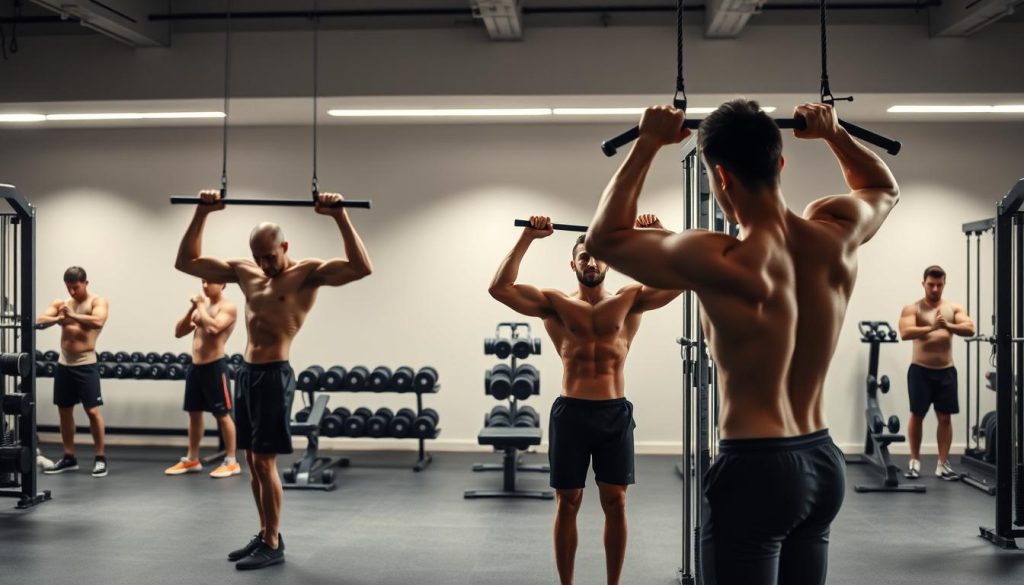
Cable flys are a versatile exercise that can be modified to target different parts of the chest, promoting overall chest development. By adjusting the angle and direction of the cable, you can effectively target various muscle fibers within the chest.
High-to-Low Cable Flys for Lower Chest
High-to-low cable flys are particularly effective for targeting the lower chest muscles. To perform this variation, stand facing the cable machine with the cables set at a high position. Hold the handle in each hand and press the cable down and across your body, squeezing your chest muscles as you do so.
Low-to-High Cable Flys for Upper Chest
Low-to-high cable flys target the upper chest muscles. Set the cables at a low position and stand facing away from the machine. Hold the handle in each hand and press the cable up and outwards, keeping your arms straight and focusing on squeezing your upper chest.
Single-Arm Cable Flys for Balance and Control
Single-arm cable flys are an excellent variation for improving balance and control. To perform this exercise, stand facing the cable machine with the cable at chest height. Hold the handle in one hand and press the cable outwards, keeping your arm straight and focusing on your chest muscles. This variation also increases core engagement and stability.
- To perform single-arm cable flys correctly, maintain a stable stance and avoid rotating your torso.
- Focus on slow, controlled movements to maximize the effectiveness of the exercise.
- Alternate arms with each repetition to ensure balanced development.
By incorporating these cable fly variations into your workout routine, you can achieve a more balanced and comprehensive chest development.
Progressive Overload Techniques for Cable Flys
Progressive overload is a crucial training principle that can be applied to cable flys to enhance chest growth. By gradually increasing the intensity of the exercise, you can continue to challenge your muscles and stimulate further development.
Adjusting Weight and Repetitions
One effective way to apply progressive overload to cable flys is by adjusting the weight and number of repetitions. Gradually increase the weight as you become stronger, or add more reps to your sets to continue challenging your chest muscles.
Time Under Tension Methods
Another technique involves increasing the time your muscles are under tension during the exercise. This can be achieved by slowing down the movement or pausing for a brief moment at the peak contraction.
The “1.5 Rep” Technique
The “1.5 rep” technique is a variation where you perform a full rep followed by a half rep in the most challenging portion of the movement. For cable flys, this means completing the full range of motion, then returning to the midpoint and extending back out to the full range. This intensifies the exercise and increases time under tension.
- Perform 3 sets of 12-15 reps with a moderate weight.
- Implement the “1.5 rep” technique for the last set to increase intensity.
- Adjust the weight as needed to maintain proper form.

Incorporating Cable Flys Into Your Chest Workout
Cable flys can be a valuable addition to your chest day, offering a unique stimulus for muscle growth. When deciding how to incorporate cable flys into your routine, it’s essential to consider your overall workout goals and structure.
Sample Chest Workout Routine
A well-structured chest workout might include a mix of compound movements and isolation exercises like cable flys. For example, you could start with barbell bench presses, followed by incline dumbbell presses, and finish with cable flys as a finisher to fully fatigue the chest.
Using cable flys as a pre-exhaust before compound movements can also be effective, as it targets the chest muscles directly and can enhance overall muscle recruitment.
Optimal Positioning in Your Workout
The positioning of cable flys within your workout routine depends on your specific training goals. If you’re looking to maximize chest development, consider placing cable flys early in your workout as a pre-exhaust. Alternatively, using them as a finisher can help fully fatigue the chest muscles.
In a push/pull/legs split, cable flys can be included on chest day, potentially as the last exercise to target the chest from a different angle. For full-body or upper/lower splits, adjust the routine accordingly to ensure cable flys are included when training the chest.
By thoughtfully incorporating cable flys into your chest workout, you can create a more balanced and effective exercise routine.
Conclusion
As we’ve explored, the cable fly exercise provides a comprehensive approach to chest development. By incorporating cable flys into your workout routine, you can experience numerous benefits, including constant tension throughout the movement and a joint-friendly alternative to other chest exercises.
To maximize results, it’s essential to focus on proper form and technique. Start with lighter weights to master the cable fly movement before progressing to heavier loads. The versatility of cable flys allows you to target different areas of the chest, ensuring a well-rounded development of the muscles.
By consistently incorporating cable flys into your workout routine and experimenting with different variations, you can take your chest training to the next level. With patience and dedication, you’ll be on your way to achieving a stronger, more defined chest.